Signs Your AC Has a Refrigerant Leak: Identifying HVAC Refrigerant Leak Symptoms for Effective Detection and Repair
A refrigerant leak in your air conditioning system reduces efficiency and raises energy costs. Recognizing the signs lets homeowners and businesses protect HVAC performance. This guide explains leak symptoms, detection methods, repair steps, and when to call a professional so you can address refrigerant issues promptly.
Key Takeaways
- Refrigerant leaks reduce air conditioning efficiency and increase energy bills significantly.
- Common symptoms include reduced cooling, hissing sounds, and unexpected energy cost spikes.
- Detection methods include visual inspections, listening for leaks, and temperature checks of coils.
- Advanced detection uses electronic leak detectors and fluorescent dye testing for accuracy.
- Repair requires professional assessment, leak sealing, and proper refrigerant recharging.
- Certified technicians are essential for safe and effective refrigerant leak repairs.
- Seek professional help when experiencing major cooling issues or visible moisture or ice on the unit.
- Regular maintenance, clear unit surroundings, and refrigerant monitoring prevent leaks and system damage.
- Timely detection and repair of refrigerant leaks extend HVAC system lifespan and performance.
Symptoms of Refrigerant Leaks
Early identification of refrigerant leak symptoms prevents extensive damage. Look for reduced cooling, hissing or bubbling noises, and rising energy costs; spotting these signs enables prompt repairs and restores system performance. If your AC struggles to cool the space, it may indicate a refrigerant leak. Hissing noises often mean refrigerant is escaping, and a sudden rise in energy bills suggests the system is working harder because of low refrigerant.
Top Rank Heating and Air Conditioning Inc., an HVAC specialist, provides leak detection, repairs, and refrigerant recharging. Their certified technicians handle refrigerant issues safely and efficiently.
Detection Techniques
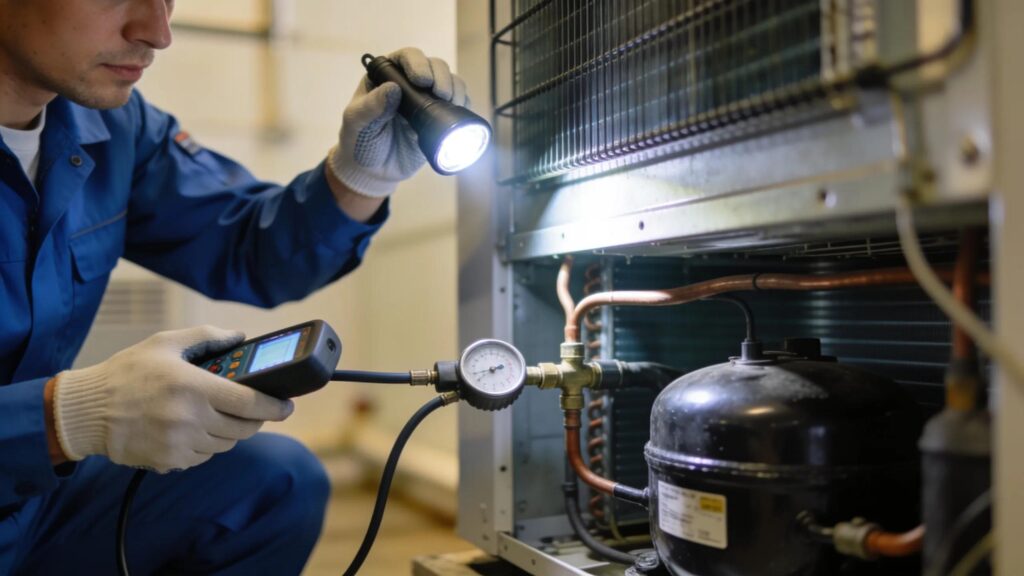
Accurate leak detection is essential to maintain HVAC efficiency. Techniques include visual inspection, listening for sounds, and measuring temperatures to locate leaks so repairs can begin promptly.
Inspect lines and connections for oil stains—refrigerant often carries oil when it leaks. Hissing or bubbling noises indicate gas escape. Measure evaporator coil temperatures; irregular readings can point to a leak. Advanced tools include electronic leak detectors and fluorescent dye testing, where dye is added to reveal leak locations.
| Detection Method | Description | Tools |
|---|---|---|
| Visual Inspections | Checking for oil spots or ice on components | Flashlight, inspection mirror |
| Listening Techniques | Using audio methods to detect hissing or bubbling | Electronic stethoscope |
| Temperature Checks | Measuring coil temperatures to find irregularities | Infrared thermometer |
Combining detection methods improves diagnostic accuracy and supports effective repairs.
Repair Methods
After detecting a refrigerant leak, prompt repair restores system function. Repairs typically include technician assessment, leak testing, and recharging with the correct refrigerant.
Technicians at Top Rank Inc. use advanced testing to locate and seal leaks. After repairs, the correct refrigerant type and charge restore optimal performance.
Repairing refrigerant leaks requires specialized training and tools; engage certified technicians who understand refrigerant systems. Delaying repairs can cause costly outcomes like compressor failure or total system breakdown.
When to Seek Professional Help
Some minor issues can be DIY, but call an HVAC professional for major problems. Seek help for unexplained spikes in energy bills, marked cooling loss, or visible moisture or ice on the unit.
Professionals conduct comprehensive assessments to determine if a leak is isolated or symptomatic of a larger issue. Delaying professional evaluation can increase costs and risk further system failure.
Preventive Measures
Preventive measures reduce the risk of refrigerant leaks. Regular maintenance, keeping the area clear, and monitoring refrigerant levels extend system life.
- Regular Maintenance: Schedule annual checkups with a qualified HVAC technician to ensure all components are functioning correctly.
- Keep the Area Clear: Maintain a clear space around your AC unit to prevent physical damage.
- Monitor Refrigerant Levels: Regularly check for unusual performance issues and have refrigerant levels measured during routine checkups.
These proactive steps help prevent leaks and maintain efficient operation, keeping your home or business comfortable year‑round.
Knowing leak signs and using proper detection and repair strategies lets you maintain your HVAC efficiently. Rely on Top Rank Inc.’s professional services to address refrigerant issues promptly and reliably.
Frequently Asked Questions
What causes refrigerant leaks in air conditioning systems?
Leaks arise from wear and tear, corrosion, physical damage, or poor installation and maintenance. Vibration can stress connections and joints, and extreme weather may also compromise refrigerant lines.
How can I detect a refrigerant leak in my AC unit?
Detect leaks by inspecting for oil stains or frost on lines and connections, and by listening for hissing or bubbling. For precise detection use electronic leak detectors or dye testing to identify and repair leaks early.
How often should I have my HVAC system serviced?
Service your HVAC at least once a year. Annual maintenance catches issues like refrigerant leaks before they escalate. A qualified technician will inspect components, clean the unit, and check refrigerant levels to ensure efficient operation and extend equipment life.
Can I repair a refrigerant leak myself?
Minor tasks such as cleaning or filter changes can be DIY, but leak repairs require specialized training, tools, and EPA certification because of safety and legal rules for handling refrigerant. Contact a licensed HVAC professional for safe, compliant repairs.
What should I do if my AC unit is not cooling properly?
If your AC isn’t cooling, check the filter and vents first. If those are clear and cooling remains poor, the issue may be a refrigerant leak or another fault. Call a professional technician for a thorough inspection and accurate diagnosis.
Is it dangerous to operate an AC unit with a refrigerant leak?
Operating an AC with a refrigerant leak is unsafe. Low refrigerant can cause overheating and compressor failure, and some refrigerants pose health risks if inhaled. Address leaks immediately by consulting a qualified HVAC technician.
What are the benefits of regular AC maintenance?
Regular maintenance improves energy efficiency, extends equipment life, and increases reliability. Routine checks catch minor issues such as refrigerant leaks before they become costly. Well-maintained systems run more efficiently, lower utility bills, and keep temperatures consistent.
Conclusion
Identifying and repairing refrigerant leaks keeps your HVAC efficient, reduces energy costs, and preserves comfort. Professional service improves performance and extends equipment life. Do not let small issues grow—schedule a service with certified Top Rank Inc. technicians to protect your investment. Proactive maintenance is essential for reliable indoor climate year‑round.